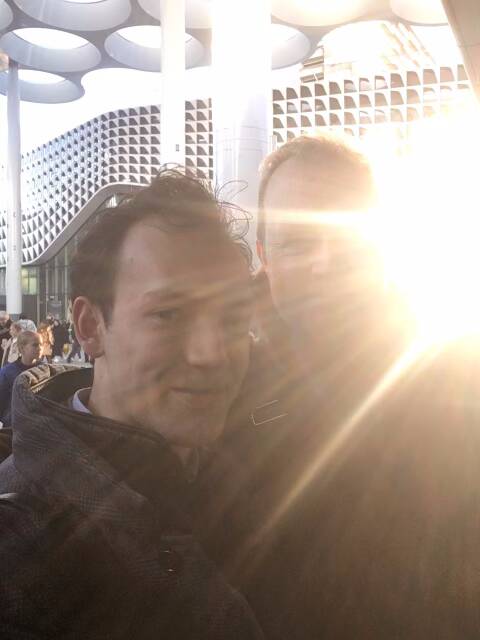
Last year (early 2025) I had the opportunity to meet someone with first-hand experience in countering Russian-, American-, Azeri- and Cyprus-based money-laundering systems, exiled whistleblower John Christmas. The encounter felt unusual, unreal in fact as you come from different realities. One disclaimer beforehand: I do not know his exact motives, but have referred to him multiple times, meanwhile sticking with my own arguments and legal basis, meaning that his opinions on the institutions from where he discovered fraud do not reflect mine per se.
One thing is certain: His case of fleeing into exile after discovering fraud is not stand-alone, but connects to a broader pattern of disruption, and bears at least some connection with Maria Efimova’s whistleblowing at Pilatus Bank (Malta) and Daphne Caruana’s investigation of Egrant. Some of the examples found based on his observations and others concern money-laundering in Latvia at Parex Banka, ABLV, Ukio, leakages at the European Central Bank, potential conflicts of interest in the EU, at the Bank of Cyprus, money-laundering channels from Ukraine, Russia, the US and Azerbaijan. This does not undo the progress of the EU as such but the cases are quite serious. What they reflect constitutes basically everything that is 'illiberal' about the current economic system.
The main motivation to support these findings are my own rights as an individual, in such a way that the connection to the European economy is crystal-clear. Well-specified individual rights, with clear real-life delineations are core requirement for a genuine European Constitution of Liberty on moral and technical grounds.
Leaving these people in exile with death threats, whether you like them or not, constitutes a direct violation of the German Eternity Clause which is the ultimate legal constraint on the EU and the ECB’s decision-making. It also directly violates Articles 1, (3), 6 and 7 of the European Charter of Fundamental Rights.
Last year I did not have the guts to speak out immediately after the meeting, which seemed a somewhat overwhelming interruption of my work flow, and this will also be one of my last comments regarding his situation for the sake of professionality.
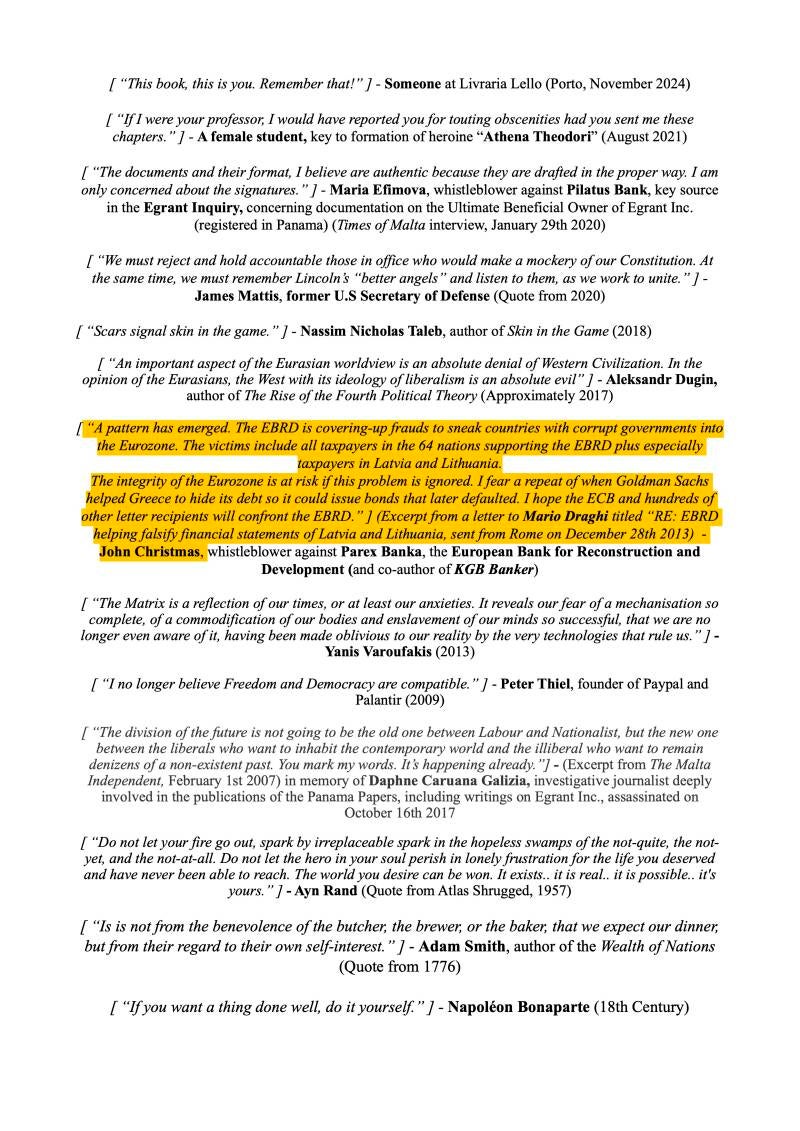
In 2022, I have immediately shared the findings regarding his case and several others with Utrecht University, where I graduated, so in some capacity the institution or members thereof could be aware of the legal facts concerned. Several EU institutions have been informed too. One such fact is a letter sent to Mario Draghi in 2013 regarding the potential risk of reversible transactions which qualify as off-balance sheet items in government books, see on the right. These could inflate the Euro’s nominal value which leads to detachment from the real economy, and hide systemic imbalances in the short-run which could materialise later. The immediate risks are limited, yet size and scale matters and so does time-horizon.
You can find attached a copy of the letter below. (original link: https://www.lawlesslatvia.com/wp-content/uploads/2014/02/ECB-letter-scan.pdf)
Add comment
Comments